About the Eikholt test
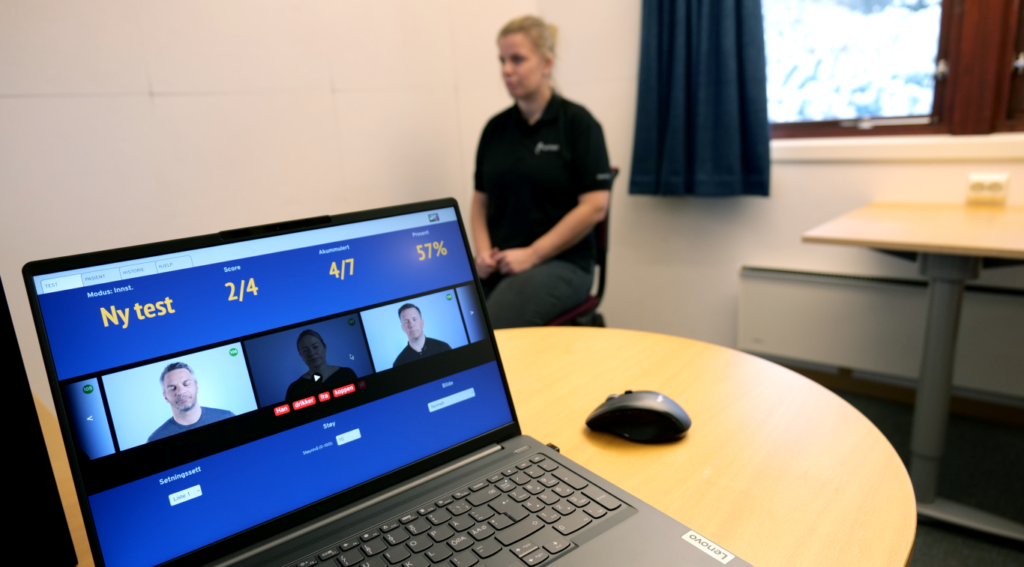
The Eikholt test is a new audiovisual test of speech understanding that provides professionals with a powerful tool for assessing functional vision and hearing ability. The test contains 600 unique sentences that can be administered by a user-friendly PC programme and presented with or without background noise, and with or without images.
What is the Eikholt test?
- Eikholt The Norwegian test is an audiovisual test of speech understanding that provides professionals with a good tool for assessing functional vision and hearing abilities.
- Speech understanding is an audiovisual phenomenon. In short, this means that what and how much we perceive in communication with others is a result of the interaction between sight and hearing.
- At Eikholt, we find that many people with combined sensory impairments have been refused necessary and appropriate services or assistive technology because they have either seen or heard "too well". This assessment is often based on clinical tests of vision and hearing that lack relevance to the person's actual challenges.
- We need good functional hearing tests that describe and quantify a person's actual ability to function in social situations. In short, this means that the conditions for the test should be as close to a real listening situation as possible. In this way, the results will provide reliable information about actual function and provide a more comprehensive functional mapping.
- Eikholt has been working for some time to develop a new, state-of-the-art audiovisual speech comprehension test that has good sound and picture quality, extensive sentence material developed in collaboration with linguists, and can be run without complicated or expensive specialised equipment. See the links at the bottom of this page for more information, including technical data.
Who uses the Eikholt test?
The test was launched at the Eikholt-conference on August 23, 2023, and is currently being used by audiologists, audiopedagogues, special educators, and others, both within the private and public sectors. The test is currently available at a number of hearing centers and private ear, nose, and throat specialists.
Do you want to use the Eikholt test?
The Eikholt test is available to anyone working with vision, hearing and communication. It is available in different versions depending on your needs and how the test will be used. Please contact Rolf Mjønes by email; rolf.mjones@eikholt.no
What Does the licence cost?
Access to the Eikholt test is based on a licence from Eikholt. The test is free to receive, However, there is a fee to cover Eikholtthe costs associated with installation and training (in the period 2025-2027, this is covered by project funds through the Dam Foundation).
For more information, please contact project manager Rolf Mjønes by email; rolf.mjones@eikholt.no


Latest news:
Research projects
October 6, 2026: EikholtNorwegian's collaboration with UIO, NTNU, USN and UiÖ has so far resulted in five master's theses and five bachelor's theses on Eikholt the test, covering a wide range of topics. Among other things, we have normative data on over 200 people with normal vision and hearing, and a lot of data on other population groups, including people with sensory loss, hearing loss, older people and people with Norwegian as a second language. Rolf Mjønes will give a lecture about this and more at this year's postgraduate course organized by the Norwegian Technical Audiological Association (NTAF) which is held at Rikshospitalet on November 12th – 13th.
Nordic cooperation
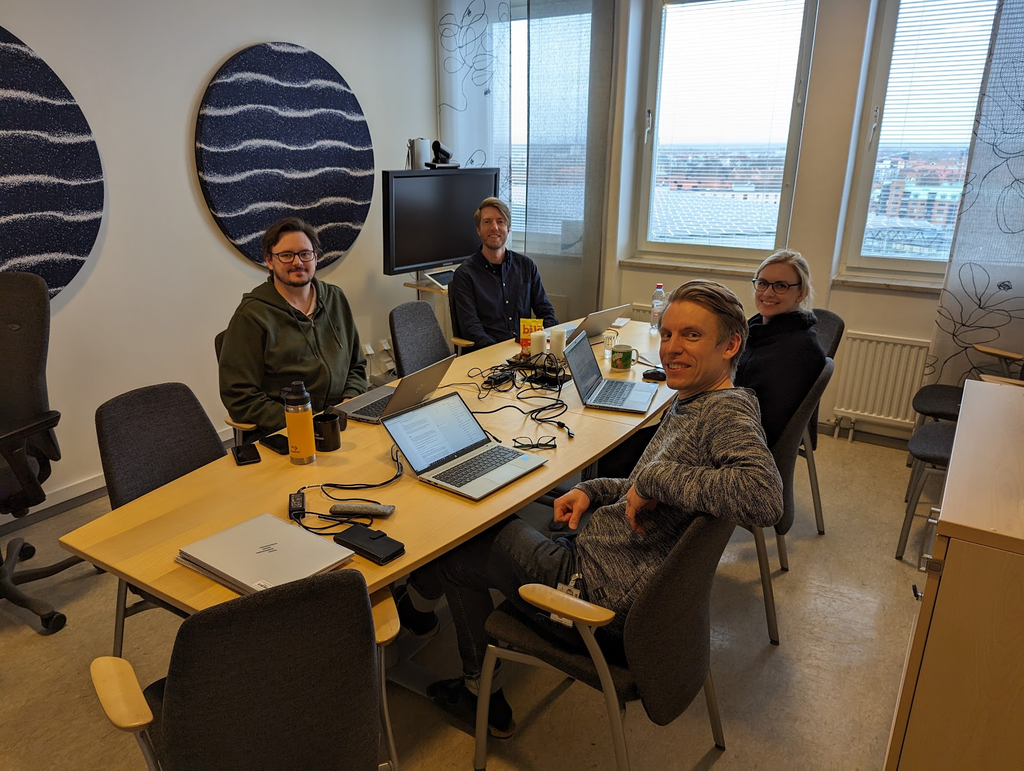
May 11, 2026: Eikholt Norwegian: has collaborated closely with the Audiological Research Center in Örebro with audiologist Erik Witte and his colleagues. Erik has led the work on the Swedish version of the test, which during the autumn and next spring will be standardized and validated at the University of Örebro.
Do you want to contribute to research?
19. September 2025: We are currently recruiting for a research project aimed at obtaining norm data for the Eikholt test. We need participants with normal vision and hearing, who can physically attend the Eikholt.
Update May 2026This project has now been completed.
6 students researching the Eikholt test
1. 1 September 2025: This autumn and next spring, a total of six students are conducting research on the Eikholt test at bachelor’s or master’s level at NTNU, UIO and USN. The projects are both quantitative and qualitative, and data from these studies will help to quality-assure the test and contribute to the future development of new features and a better normative data base. These projects will be published during the summer of 2026.
Further validation of the Eikholt test at NTNU
2 December 2024: The Eikholt test has already been validated at the University of Oslo (ISP). This winter two students in the audiography programme at NTNU are starting to collect data using the Eikholt test. The students will collect data on the elderly group (70+), which will result in even better norm data for the test.
Project funds for spreading the test
18 November 2024: In the autumn of 2024, the DAM Foundation announced that the project "National dissemination of combined vision and hearing test" will receive funding for the project period autumn 2024 - winter 2026. This means that the threshold for receiving the Eikholt test will be even lower, and that recipients will not have to pay for receiving the test, or for the installation of equipment and necessary staff training. The project was promoted by HLF, which is the responsible applicant organisation. Read more about the project at the website of the DAM foundation.
The Eikholt test version 2.0 will be launched in autumn 2024:
20 August 2024: This autumn, we are making the updated, validated version of the Eikholt test available. In addition to new lists based on norm data from ISP at UIO, the test includes a number of new features and improvements that will make the testing process even more efficient and user-friendly.
Report function.
Now you can generate a detailed report based on the latest test results, including an explanatory text describing the patient's degree of audiovisual gain compared to the normal population. The report contains several information-rich elements to help you interpret the results from the different test conditions.

Version 2.0 of the test will be made available to all previous recipients of the test and all new recipients will automatically receive the latest version.
Contact person

External references
 I've been waiting for this test for 60 years
Article about the test's launch on eikholt.no
Article about the Eikholt test in "Optikeren"
The Eikholt test on the cover of "Audiografen"
Article about the Eikholt test in "Din Høring" (HLF)
Article about the development of the Swedish version of the test
NKCDB mentions the Eikholt test on its website
The Eikholt test on HLF's project page
Project description (short version)
English abstract
Experts united around the Eikholt test
The Eikholt test in Dagens Medisin