Three days of learning about the use of interpreters and companions

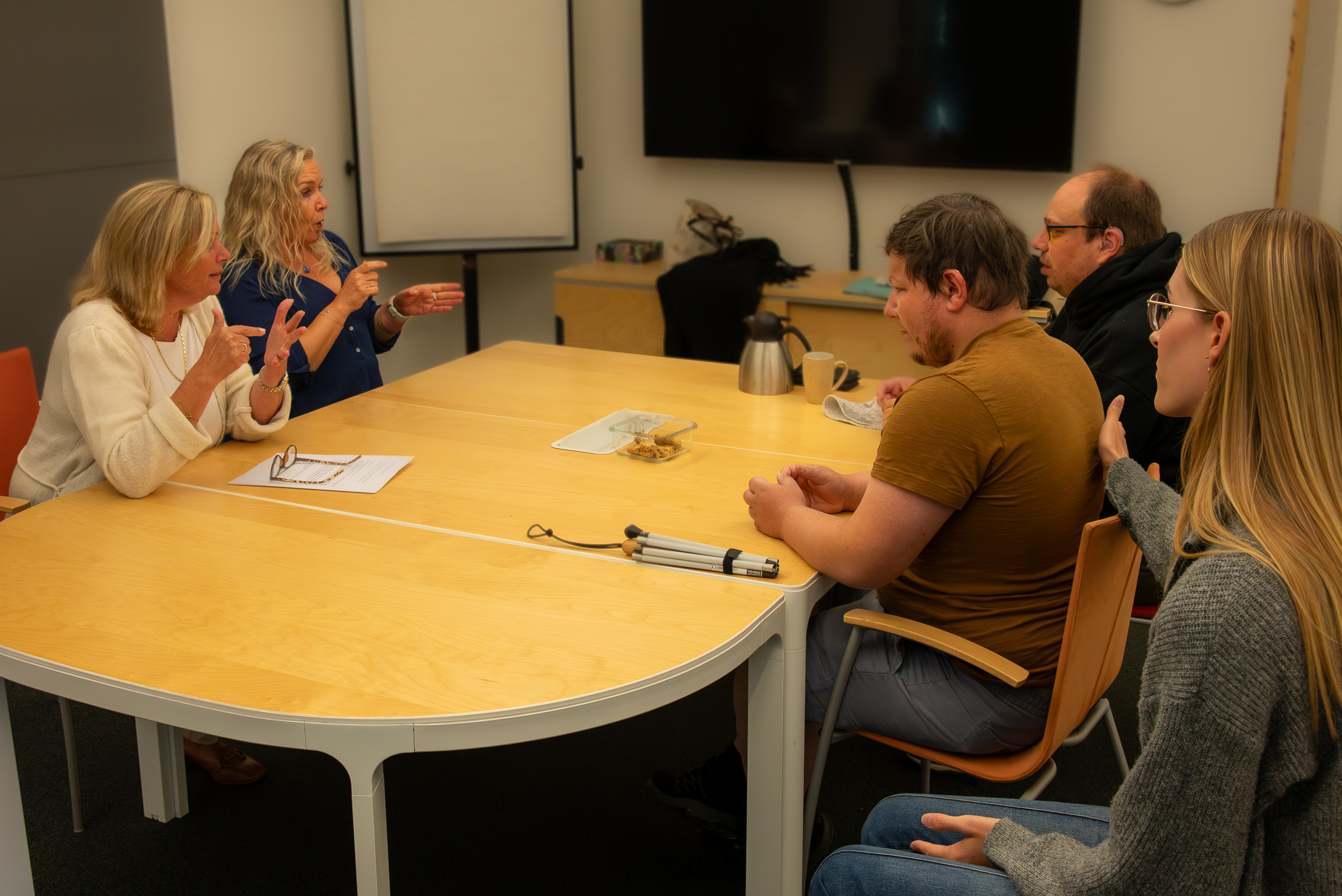
Last week, Eikholt conducted the first group course "How to use an interpreter/companion". 9 participants with varying experience of using interpreters/companions were guided through the days by Inger Lise Vincent and Hildebjørg K. Bjørge.
The programme included presentations from various actors in this professional field.
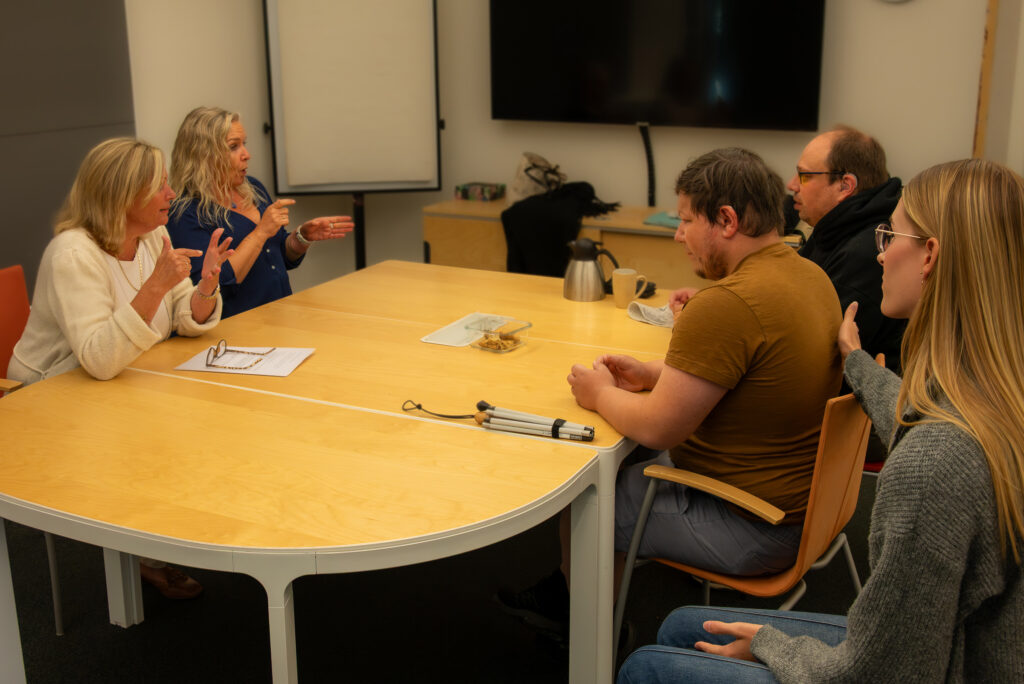
Introduction to interpreter booking and personal experiences
First up was Lene Karin Mittet from NAV interpreting service in Vest Viken. We learnt about the process for applying to use an interpreter. We also learnt about rules, rights and how to book.
Next up was course participant Solgunn, who shared her experiences and thoughts on becoming an interpreter user. How do you start using an interpreter? What emotions does this trigger?
The interpreter's tasks
Day two started with Magnhild Røed Michalsen from the interpreter programme at Oslo Met. She talked about the interpreter's three main tasks:
- translation
- accompanying
- description
The participants also had a go at describing their living room at home to each other.
The carers' perspective
Then came Solfrid Vartdal. She gave us an insight into what it's like for people close to them to have interpreters in their lives. "Using an interpreter/companion doesn't just affect the interpreter user. The interpreter also comes into the lives of the whole family and close contacts. There were powerful stories and important reminders for us all!
Excursion to the National Museum
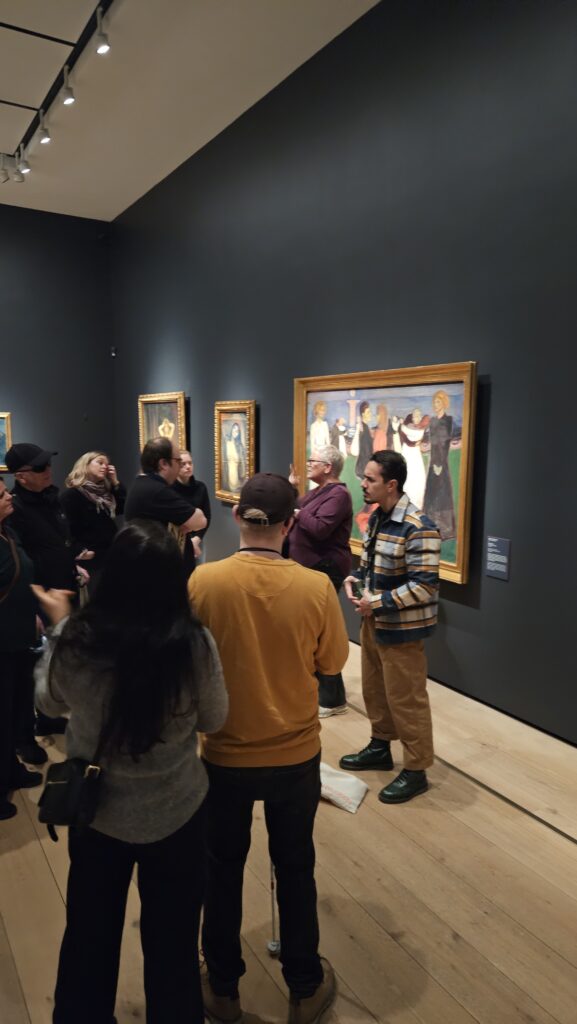
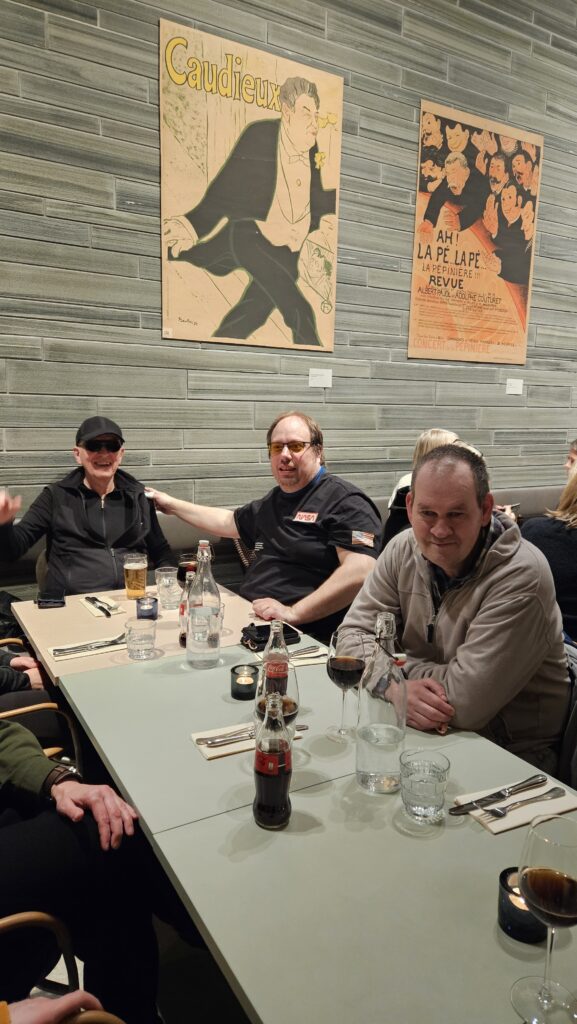
After two days on the course, we wanted to test what we had learnt. An excursion to the National Museum in Oslo was on the programme. The participants had to create assignments and say how they wanted descriptions and accompaniment on the trip. Along the way, they were to evaluate and adjust. We had a guide who showed us around and told us about the art. Afterwards, it was time for lunch in the café before heading back to Drammen and Eikholt.


Reflections and practical information
We spent the last day reflecting on the trip. We also went through practical information about how to book an interpreter and what you can use an interpreter for.
New course in 2026
This course is also coming in week 49, 2026. If you think this is something for you, then Application deadline 1 May. You can find the group course interpreter/companion here: How to use an interpreter/companion - Eikholt
Want to read about other group courses?
Follow this link to find Eikholt's group courses and submit an application: Group course - Eikholt
Do you have any questions?
Get in touch with us at Eikholt. We are happy to help you! Contact us - Eikholt