Architecture for All Senses – From Ambition to Human Right

Press release
How do we create environments where all people can experience accessibility, inclusion, and genuine participation? This is the core of the project Architecture for all the senses through Eikholt. Through the project, we explore what is needed for people with deafblindness and thus many others can orient themselves, participate and experience mastery in everyday settings. When we develop solutions that work for people with combined sensory loss, we simultaneously contribute to better solutions for everyone.
A historic shift
Our work is more relevant than ever. From 1 January 2026, the UN Convention on the Rights of Persons with Disabilities (CRPD) incorporated into human rights law. This marks a historic shift in Norwegian law. Universal design is no longer just a technical requirement; it is a statutory human right. For public actors, planners, service developers, and professional communities, this means we must broaden our horizons. The CRPD takes precedence, implying that the principles of accessibility, inclusion, and equal participation must underpin the development of society's solutions.
From facilitation to universal design
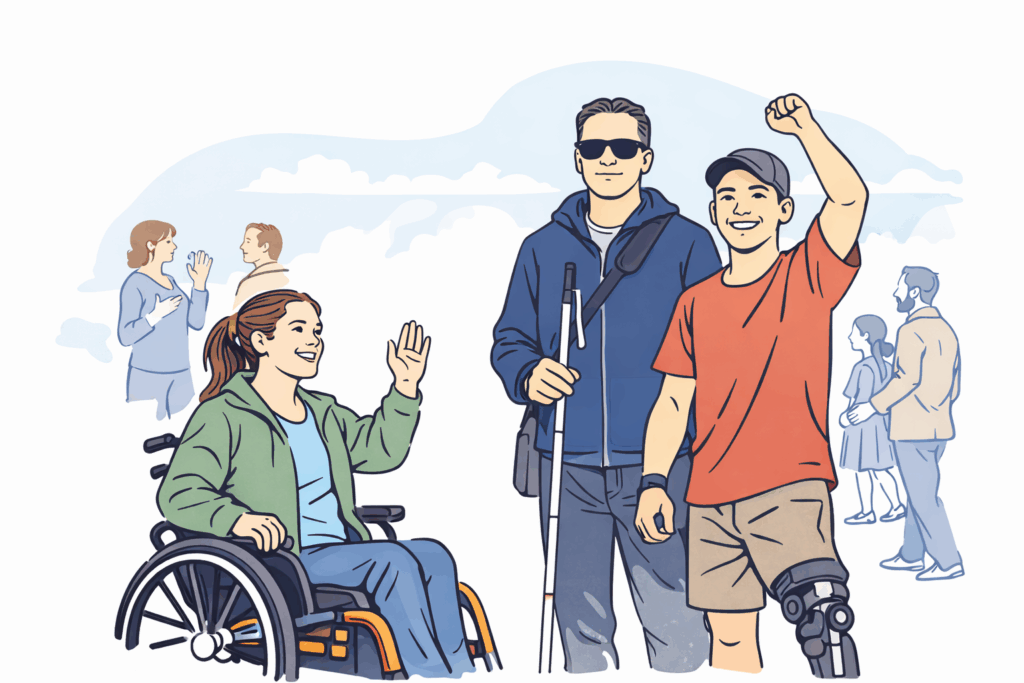
An important principle now being strengthened is that universal design shall be the rule – not the exception. Individual accommodations will still be necessary in some cases, but the ambition must be to develop solutions that work for as many people as possible from the outset. This is also a fundamental perspective in Architecture for all the senses: Accessibility is not just about meeting requirements, but about how environments are actually experienced and used in practice.
Three books – one knowledge boost
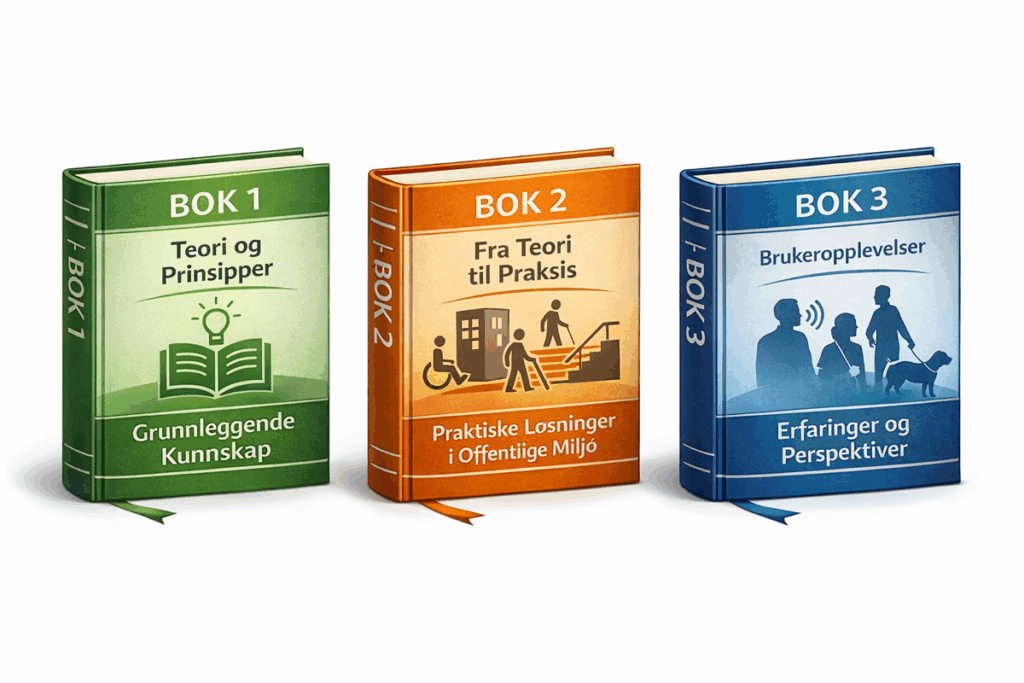
The project is developing a series of three books that, together, will contribute to increased knowledge of universal design with a particular focus on sensing, orientation, and mobility:
Book 1 provides a professional foundation and introduces central concepts, perspectives, and models – including how the interaction between people and their environment affects accessibility and mobility.
Book 2 will be more focused on practical application, with emphasis on planning, design, and concrete solutions in various types of environments.
Book 3 will highlight user experiences and case-based knowledge, and show how solutions actually work in practice.
We are now finished with book 1, and work on the next parts is well underway.
Experience as a driving force
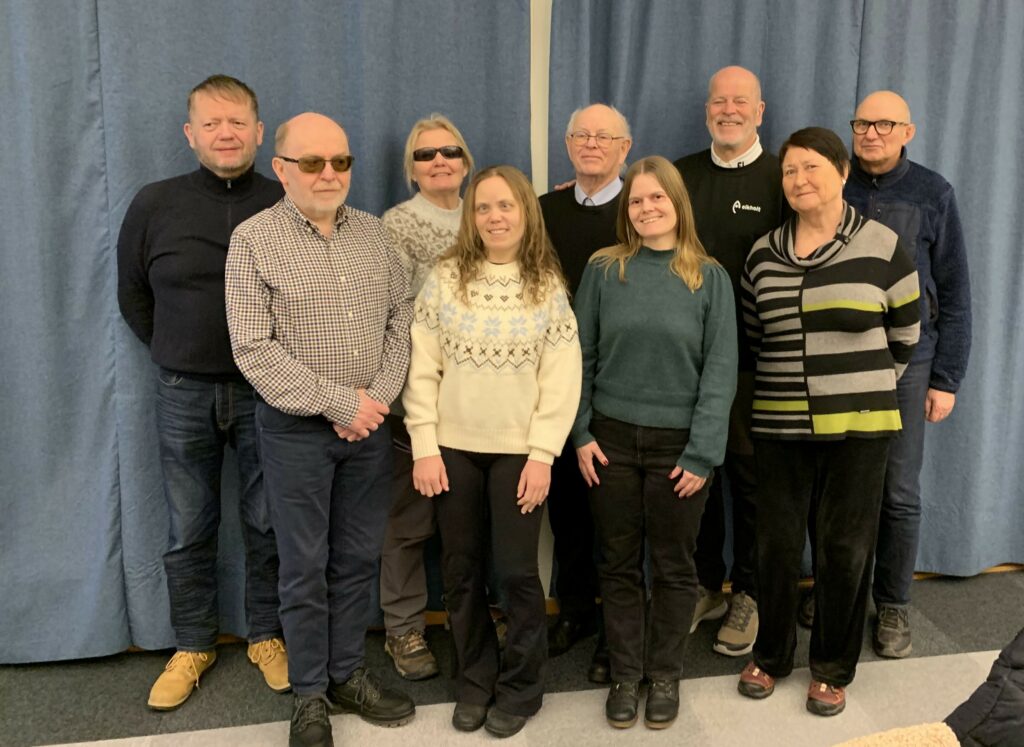
Alongside the development of book 2, we are already gathering experiences for book 3. Here, we collaborate closely with experience consultants who share their experiences of what works and what doesn't, when encountering different physical environments. These experiences give us an insight that cannot be gleaned from standards and regulations alone. They show how accessibility is actually experienced in practice and where barriers exist.
A shared responsibility
Architecture for all the senses It's fundamentally about more than just facilitation. It's about developing a society where people can participate on equal terms – regardless of their circumstances. With the CRPD as part of human rights law, this is not just an ambition. It is a commitment. At the same time, it is an opportunity to create environments that are not only accessible in principle, but which are actually experienced as inclusive, safe, understandable and provide everyone with opportunities for participation.
Do you have any questions?
Contact project manager Rolf Lund by email: rolf.lund@eikholt.no
Read more?
Want to read about other projects? Read more about projects organised by Eikholt here.
Want to know more about our services? Read more about our services here.