My white stick: More than just a tool

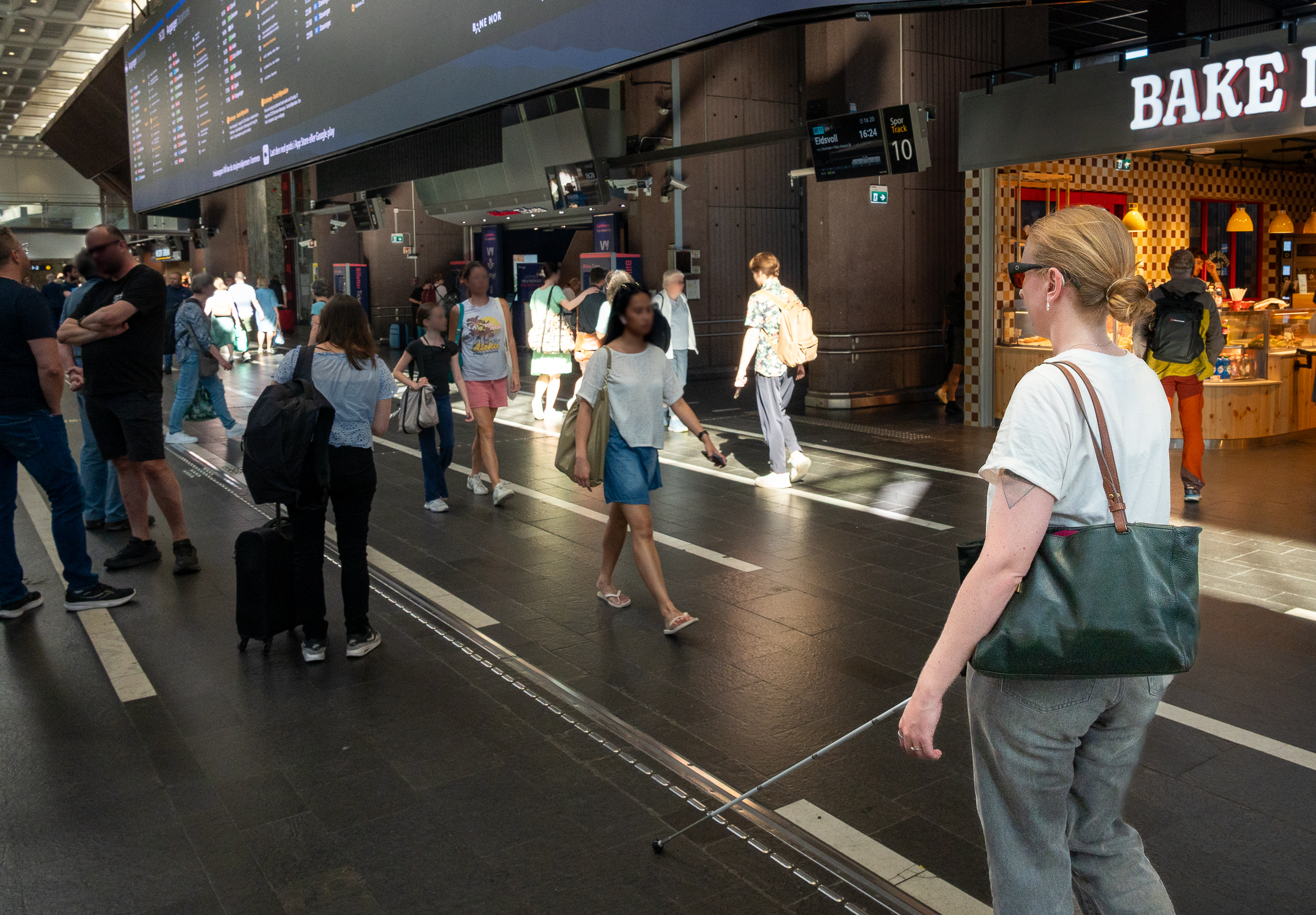
In this series, we meet people with combined visual and hearing impairments who have found their favorite assistive device and let them tell in their own words how it makes a difference in everyday life.
This time it is Randi Espeland who tells about the white stick.
Randi Espeland
– I was born blind, but it wasn’t until December 2025 that I was identified as deafblind. Since then, the challenges have been piling up.
– Getting control over my surroundings has become more difficult, and moving around in noisy environments like busy streets and shopping malls can sometimes feel like a risky sport. Yet one simple thing has followed me through everyday life for many years: the white stick.
Both a tool and a means of communication
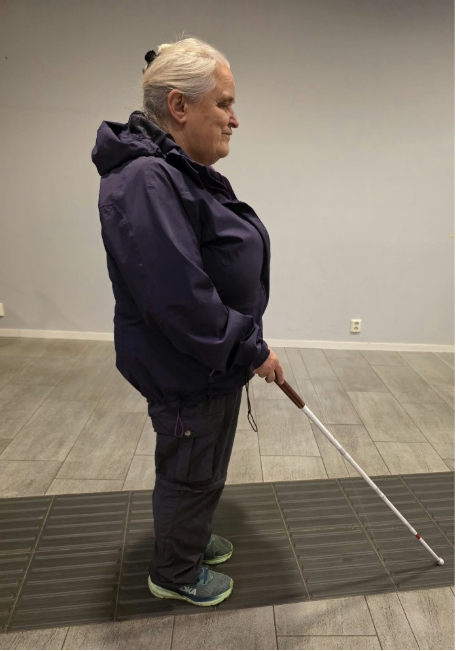
– I received mobility training with a white cane at Dalen Public School for the Blind in the late 60s. Since that day, I have never been a day without the white cane.
– The cane helps me detect obstacles, stumbling blocks, and changes in the surface, and it gives the surroundings a clear signal that I am blind and may need extra time or help.
– For me, the stick is therefore both a tool and a means of communication. It tells others something about my situation, before I myself have to explain it.
The white stick provides security in everyday life
– I use the cane daily both when I walk with and without a guide dog. It is easy to carry, does not require electricity or charging, and is always ready when I go out. With proper use, it detects obstacles such as potholes, holes, stairs, and other hazards that might otherwise be difficult to detect.
– Once, my cane was actually knocked out of my hand. Had I not had it, I could have been hit. A person who saw what happened helped me find it again. That incident reminds me of how crucial the cane is to my safety.
The white stick is not a sign of weakness. It is a symbol of independence, security and the right to move freely in society.
Quote by Randi Espeland
Don't hesitate to use the white stick
– I still encounter many people who hesitate to use white canes because they fear being labeled as visually impaired. They might think that they would look less visually impaired without it. In my opinion, that is a completely wrong perception.
– The white stick is not a sign of weakness. It is a symbol of independence, security and the right to move freely in society.
No shame in being blind or visually impaired
– My conclusion is simple: There is no shame in being blind or visually impaired. Using a white cane can lead to more freedom, not less. It gives me the opportunity to orient myself, warn of my surroundings, and face everyday life with greater confidence.
– Therefore, I would like to encourage everyone who might benefit from it:
Don't hesitate. Use the stick!
What is White Stocking Day?
October 15th is the international "White Cane Day". In Norway, the day is also known as Accessibility Day. The day aims to raise awareness about the importance of the white cane as a means of helping and symbolizing independence for people who are blind or visually impaired. The celebration highlights themes such as safe travel, accessibility, and the right to actively participate in society.
Want to know more?
The white stick is also called a mobility stick and is a tool provided by NAV to people who meet the requirements. You can read more on NAV’s website: Assistive devices for mobility and orientation – nav.no
Do you want courses? You can find the form here: Enquiry individual courseThe queen looked on with tears in her eyes as her daughter prepared to sail away.
Do you have any questions?
Get in touch with us at Eikholt. We are happy to help you! Contact us - Eikholt