New strategy supports Eikholt project on universal design for deafblind people

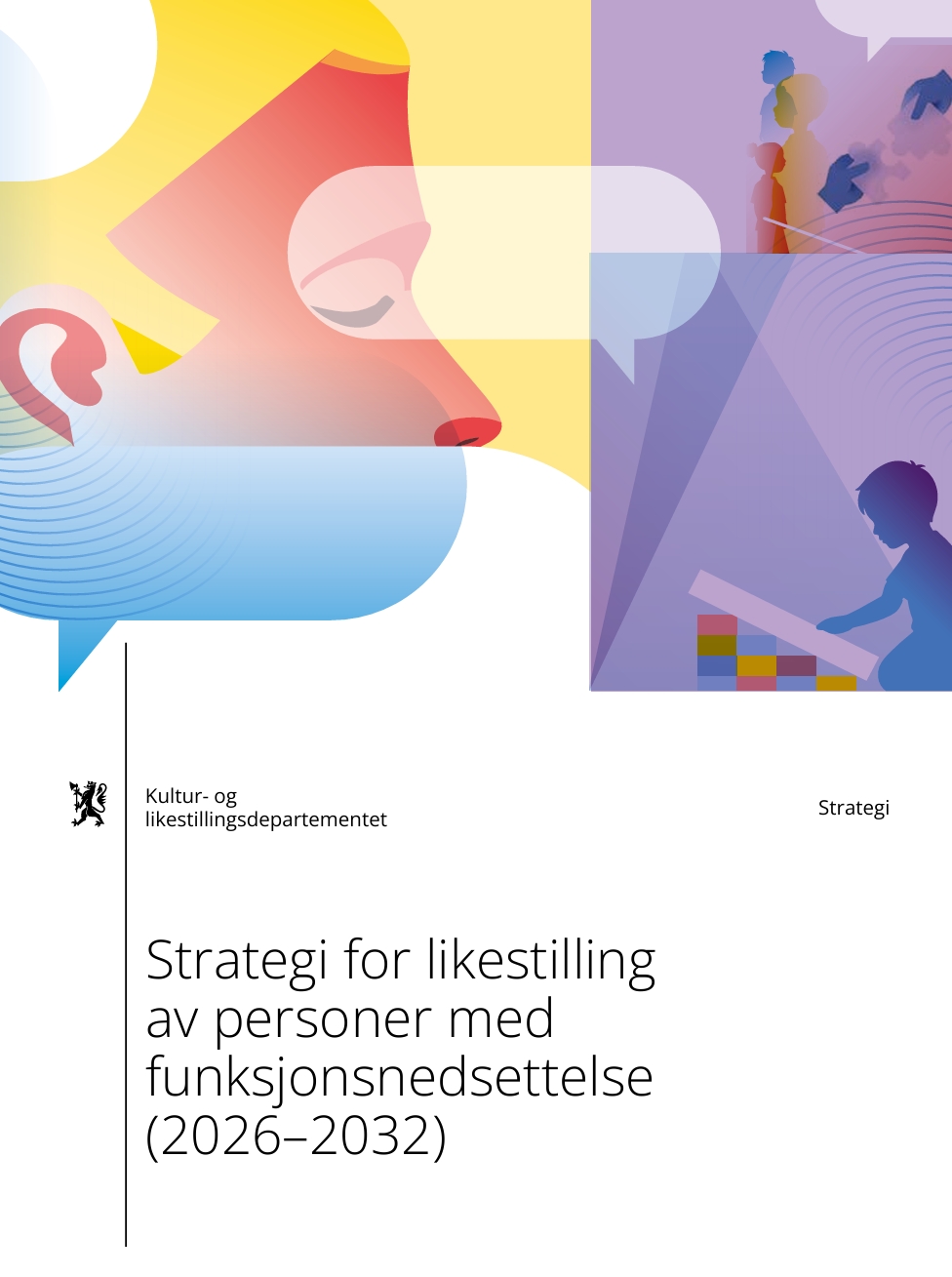
In a new SStrategy for the equality of persons with disabilities (2026–2032) The Eikholt government points to universal design as an important prerequisite for participation and equal opportunities. This confirms the importance of the work on the project “Architecture for all senses – inclusive for all”.
Regulatory development and skills development Inclusion Universal Design
The government’s strategy emphasizes that services, transport infrastructure, buildings, outdoor areas, and digital solutions must be designed so that they can be used by the greatest number of people, regardless of functional ability. To ensure equal access to the community’s spaces, barriers must be removed and universal design must be strengthened. Therefore, the government states that work on regulatory development and skills development in universal design must be continued and strengthened.
«Universal design is an important societal quality that contributes to sustainability, increased equality, and better physical and digital environments for everyone»
Quote taken from new strategy for Equality of persons with disabilities (2026–2032)
Four areas of effort
In addition to universal design, the government has chosen to prioritize the areas of effort:
- democracy and equal participation
- security and freedom from discrimination
- a well-functioning mechanism that coordinates and integrates the services for people with disabilities.
The four areas of intervention are considered to be important for the realization of the rights of persons with disabilities. The government’s work is based on the principles of the UN Convention on the Rights of Persons with Disabilities (CRPD).
Eikholt project on accessibility for deafblind people
The strategy is fully in line with Eikholt its ambitions. In Eikholt the -project "Architecture for all senses – inclusive for all", the plan is to develop a guide for the universal design of public buildings and urban outdoor spaces, with a special focus on people with combined visual and hearing impairments.
If you want to read more about the project, see here: Architecture for all senses - inclusive for all
Do you have questions about the content of this article?
Contact Senior Researcher Andrè Vågan