Architecture for all senses - inclusive for all

Select page content
Architecture for all the senses
Architecture for all the senses
Architecture for all the senses is a professional development project that aims to contribute to better universal design of public buildings and urban environments for people with combined visual and hearing impairments/deafblindness.
The project consists of two separate sub-projects with different funding, but with a common academic framework and an overall end product: three textbooks that are presented together.
- Subproject 1 is supported by Bufdir - Accessibility Grant 2025, and includes Book 1 and the first part of Book 2.
- Subproject 2 is supported by The Dam Foundation, with The Hearing Society as the applicant organisation, and includes the rest of Book 2 and all of Book 3.
The projects are carried out in parallel, with clearly defined funding streams, but are professionally coordinated so that they collectively result in a comprehensive knowledge base.
The project is led and implemented by the Eikholt Foundation, with support from national and international external consultants.
Why this project?
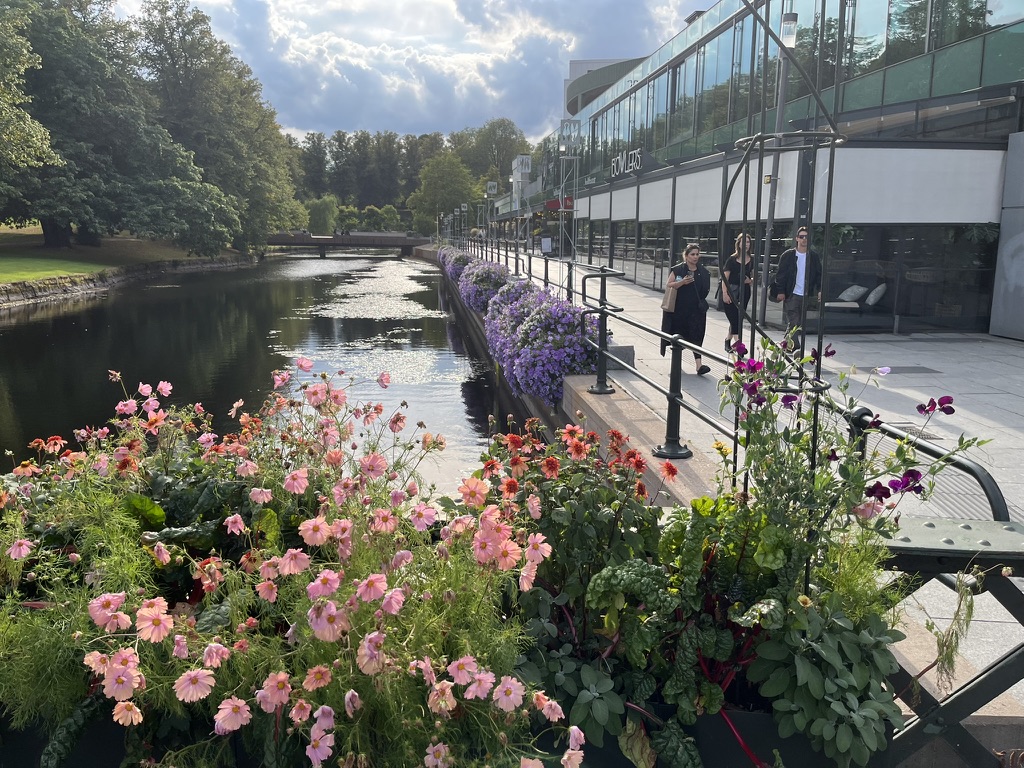
Although public authorities have clear requirements for universal design (UD), in practice exemptions are often granted. This leads to solutions that do not work well for people with sensory impairments, limiting equal access and participation in society.
People with combined visual and hearing impairment/deafblindness face particular challenges in public buildings and urban environments. Inadequate facilitation can lead to insecurity, reduced independence and limited participation in society.
The aim of the project is to help ensure that public buildings and outdoor spaces not only fulfil the minimum requirements of the regulations, but become truly inclusive and functional for everyone - regardless of sensory loss.
We want to create buildings and urban environments that provide equal access and participation for all
Project manager Rolf Lund
- "We want to create buildings and urban environments that provide equal access and participation for all. People with combined visual and hearing impairment/deafblindness often face significant challenges in public spaces, and we want to help reduce these barriers," says Rolf Lund, project manager at the Eikholt Foundation.
Towards a more inclusive society
Poorly designed environments can lead to isolation and reduced participation in social life, work and culture. By strengthening knowledge about multi-sensory architecture and universal design, the project lays the foundation for:
- increased professional expertise
- better planning and decision-making
- more inclusive social development
Target group
The project is aimed at professionals who influence the design of buildings and public spaces:
- planners
- architects
- members of public committees and councils
The aim is to provide these groups with a better understanding of combined sensory loss, the importance of multisensory solutions and how universal design works in practice.
Professional collaboration and user involvement
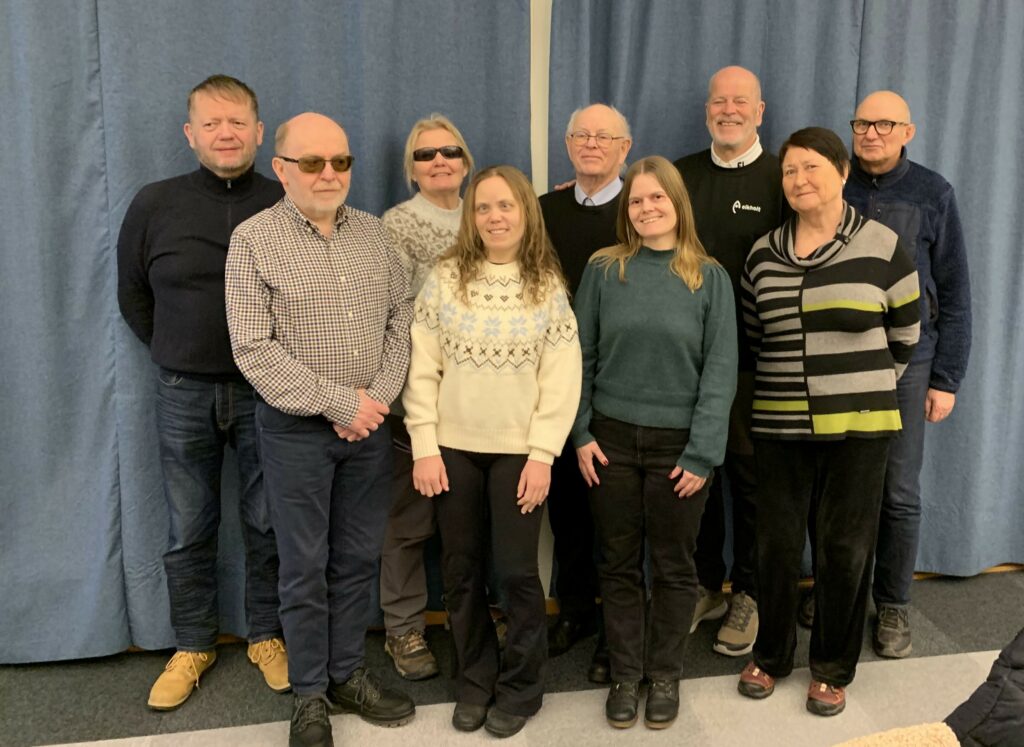
The project is carried out by Eikholt, represented by Ann-Britt Johansson and Rolf Lund, in close co-operation with external experts;
• Architect and experience consultant with combined sensory loss – Severine Kas (The Netherlands)
• Special educational needs teacher, mobility instructor and peer support worker – Arne Kjeldstad (Norway)
• Architect and accessibility expert for visually impaired people – Richard Cooper (Norway)
- Karianne Havsberg, experience consultant
- Svein Fossum, experience consultant
- Karine Vassbotn Hestholm, experience consultant
- Pål Kjetil Lyngstad, experience consultant
- Mette Midtseter, experience consultant
User involvement is key: Five people with combined visual and hearing impairment are actively participating, after completing the course user involvement in project work. Their experiences become an integral part of the project.
Dissemination of the project will take place in collaboration with the user organisations National Association for the Combined Visually and Hearing Impaired/Deafblind (LSHDB) and Norwegian Association of the Deafblind (FNDB).
Project goal: three textbooks
The end product is three textbooks, scheduled for completion in 2026. The books are academically coherent, but cover different perspectives and levels.
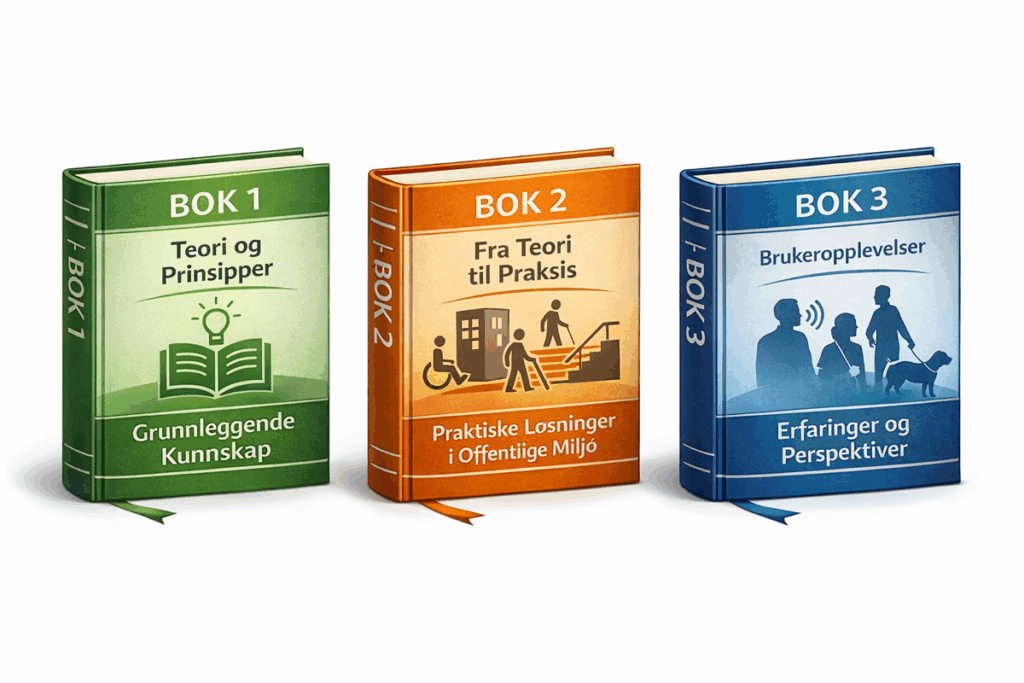
Book 1 - About people with combined visual and hearing impairment and multisensory architecture
A basic book about:
- sensory understanding
- multisensory experiences
- the foundation for multisensory architecture
The book is based on research and experiential knowledge from people with combined sensory impairments. It emphasises the use of natural architectural elements - light, materials, sound, smell and tactile elements - to create holistic and inclusive environments.
Book 2 - Universal design in practice, in buildings and urban environments
A practical book with examples of good and bad accessibility, illustrated with images and concrete solutions. The examples include both urban environments and public buildings, with a focus on multi-sensory qualities and holistic solutions.
The book will show examples of good and bad design in key building elements, including:
- Entrances and lobbies - clarity, acoustics, contrasts and clear initial orientation.
- lifts and stairs - location, contrast marking, tactile and auditory signals
- doors and passages - design, operation, clarity and predictability
- Corridors and communication areas - structure, guidance, lighting and acoustics
- Signage and information systems - visual, tactile and digital information that works together
- receptions and service points - accessible communication, sound conditions and physical design
- meeting and conference rooms - acoustics, lighting, furniture and technical solutions for participation
- toilets and changing rooms - orientation, use of contrasts and accessible information
- Break rooms and social meeting places - safe movement, overview and opportunity for informal interaction
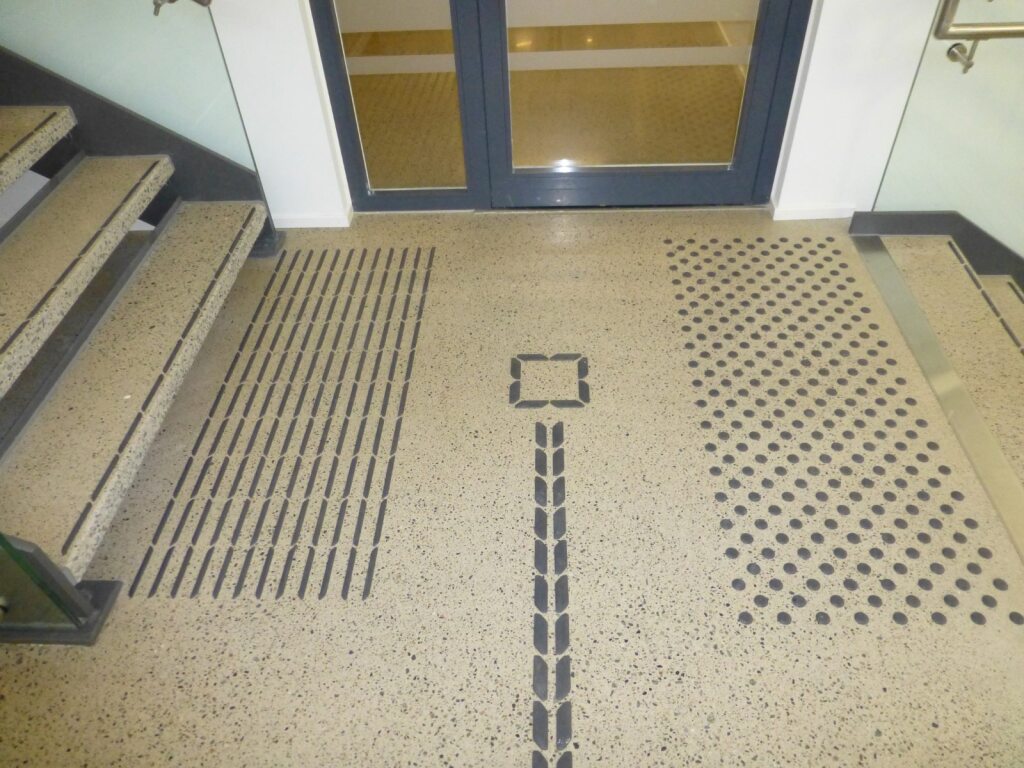
Examples are given of elements that are crucial for orientation and safe movement in urban spaces and outdoor areas:
- Pedestrian zones and pavements - width, evenness, contrasts and free traffic lines
- Crossing points and transition areas - tactile fields, kerbs, audio signals and visual clarity
- Guiding lines in outdoor areas - natural and constructed guiding lines in paving, materials and landscape
- squares and plazas - structure, orientation points, acoustic conditions and rest zones
- Entrances and transitions between indoors and outdoors - clarity, contrast, shielding and predictability
- public transport hubs - stops, terminals, platforms and connections between modes of transport
- furniture and fixed installations - benches, pillars, bicycle parking and temporary elements that can create obstacles
- Outdoor lighting - uniformity, glare, contrast and legibility in different lighting conditions
- sound environment in urban spaces - background noise, echo, directional sound and the possibility of auditory orientation
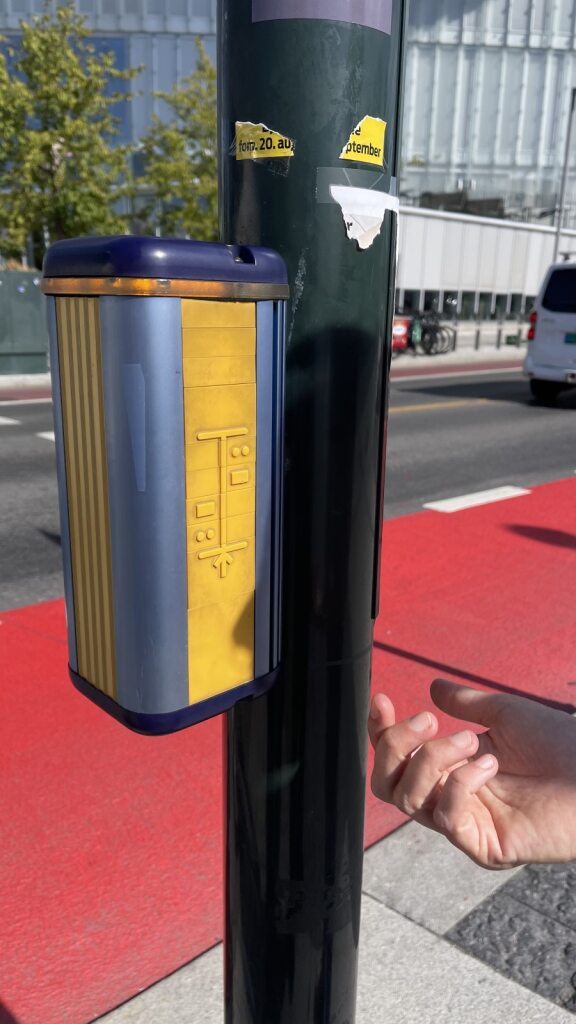
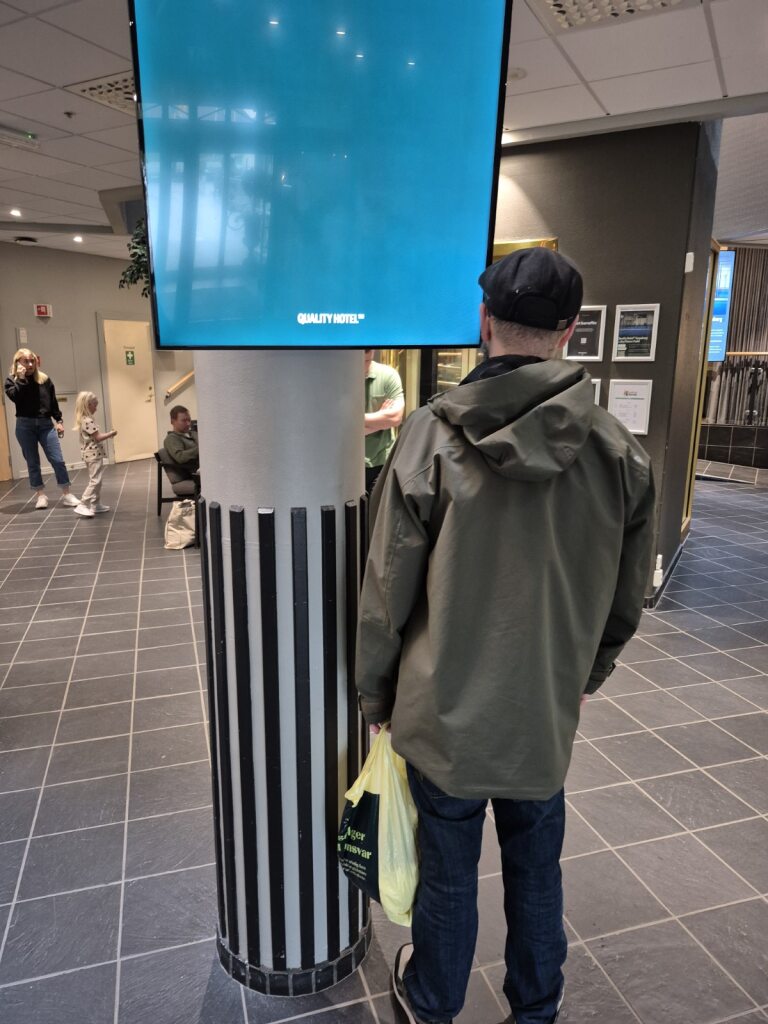
The examples in the book should make it clear how accessibility affects users' ability to do things:
- orientate themselves independently
- move safely and efficiently
- understand and use buildings and urban spaces
- participate on equal terms in public and social contexts
Book 3 - Architecture seen with all the senses
An experience-based book in which five people with combined visual and hearing impairment/deafblindness share their perspectives on public architecture.
The book provides unique insights into how buildings and urban spaces are experienced when navigating with multiple sensory impairments, and how participation in public spaces with reduced visual and hearing function requires large amounts of energy - both physically and mentally.
A more inclusive society
Through research, professional development, practical examples and user voices, the project will contribute to:
- increased expertise among professionals
- greater understanding of multi-sensory accessibility
- better accessibility in public buildings and outdoor areas
- Equal participation for people with combined visual and hearing impairment/deafblindness
Good universal design is not only about accessibility and the right to participate, but also about reducing unnecessary energy loss. For people with combined visual and hearing impairments, poor design can lead to high physical and mental strain, while good solutions free up energy for participation and interaction.
- "These books will be tools for professionals who want to make a difference. We hope it will lead to increased understanding and more inclusive solutions in the public space.," says Rolf Lund.
Messages from the project
New EU strategy strengthens the importance of multisensory architecture and participation
Architecture for all the senses – from ambition to human right – Eikholt
Hearing Association: You can also find information about the project on Hørselsforbundet's website: Multisensory architecture and visual and hearing impairment
Would you like to read about Eikholt’s projects?
Read about projects organised by Eikholt here.