- Deafblindness
- Syn
- Hearing
- Mobility
- Communication
- ICT
- Research projects
- Publications
- Conferences and webinars
Are mobility programmes in hearing aids useful outdoors?

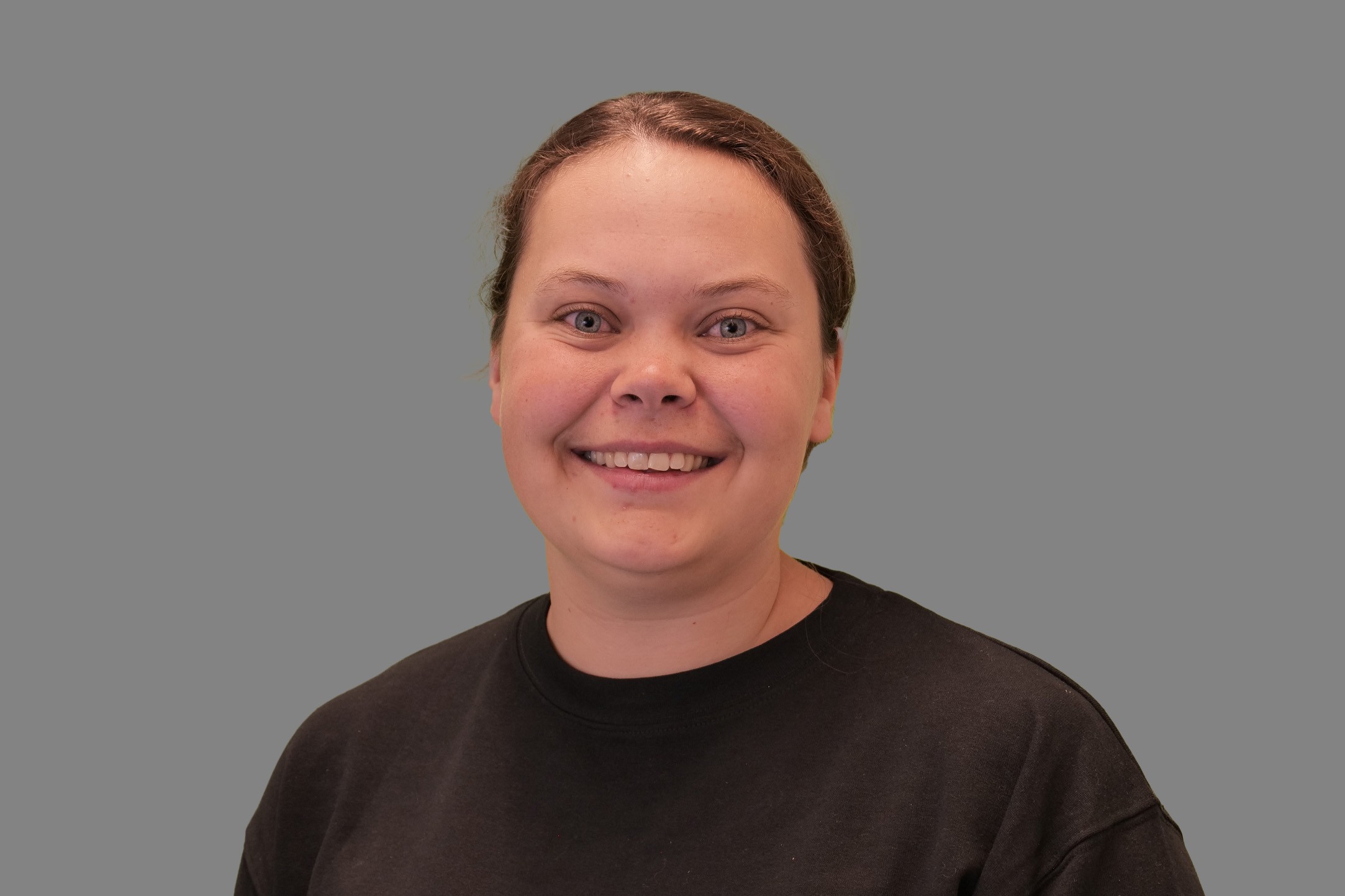
In May 2025, audiographer at Eikholt Anne-May Førland submitted her master's thesis. This investigated whether mobility programmes in hearing aids for people with combined visual and hearing impairment/deafblindness are useful outdoors. The project has now been completed, and this is a summary of the results
Background to the project
As an audiographer at Eikholt National Resource Centre for the Deafblind, Anne-May found it challenging to fit hearing aids for blind and partially sighted people who rely on hearing for orientation and mobility.
Colleagues recommended a separate mobility programme, a programme without noise reduction and with automatic functions switched off. This was to ensure that users perceived as much sound as possible from the outdoor environment.
Although it went against the usual principles of fitting people with severe hearing loss, Anne-May chose to adopt mobility programmes with the aim of giving users better conditions for safe mobility. At the same time, she realised that research in this area was almost non-existent.
This aroused a clear professional commitment. When choosing a topic for her master's thesis, mobility programmes were therefore a natural choice. The research question Anne-May wanted to find out was:
Can a separate mobility programme in hearing aids give hearing aid users with combined visual and hearing impairment/deafblindness better objectively measured sound localisation and better subjective experience of control, security and overview in situations where you use your hearing for orientation, compared to the hearing aid's regular programme?
Development and testing of mobility programmes
The first step in the work was to develop a general recipe for a mobility programme that could be used regardless of hearing aid supplier. The recipe is based on available research on which settings provide the best sound localisation
- A new programme was created based on "quiet" or "universal".
- The reinforcement was kept as it was in the participants' regular programme.
- Frequency compression/transposition/shifting was switched off.
- Microphone was set to locked omni.
- Wind noise reduction and feedback removal were at the same level as in the normal programme
- noise cancellation, speech focus, echo cancellation, impulse noise reduction and soft noise reduction were turned off completely.
Recipe for a mobility programme
In the link below you will find a detailed description of the mobility programme that you can download and print. PDF with detailed description of the mobility programme.
How the mobility programme was tested
In order to test whether the mobility programme was actually useful, data was collected from 23 bilateral hearing aid users with combined visual and hearing impairment/deafblindness. First, the participants answered a questionnaire about how they orientated themselves. Then otoscopy, audiometry with air and bone conduction, as well as audiometry with warble tones in a free field with hearing aids on were performed. The mobility programme was then loaded into the participants' own hearing aids, without them knowing the position in the programme sequence.
Objective sound localisation test
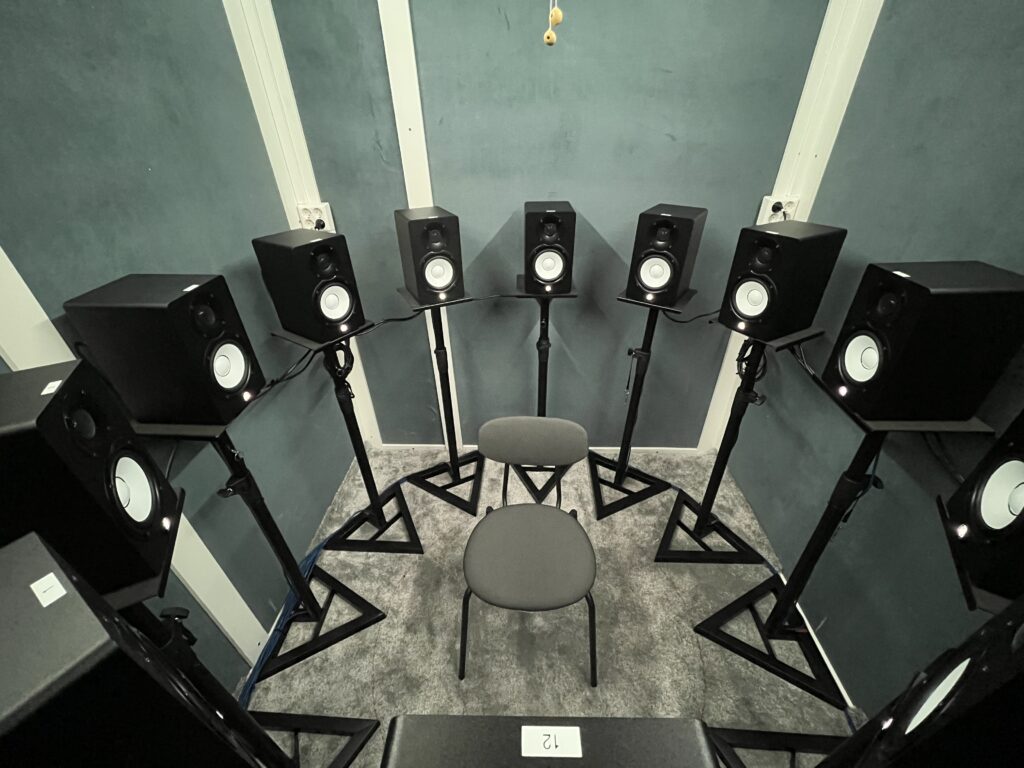
The normal programme and the mobility programme were then tested against each other in an objective sound localisation test with 12 speakers in a circle. The test used three sounds: 250 Hz pulsed narrowband noise, 4000 Hz narrowband noise, the sound of car tyres on asphalt with traffic noise in the background. The result was measured by "accuracy" (RMS Error) and percentage of front-to-back errors (FBC Rate). A control group of 64 people with normal vision and hearing contributed as a control group.
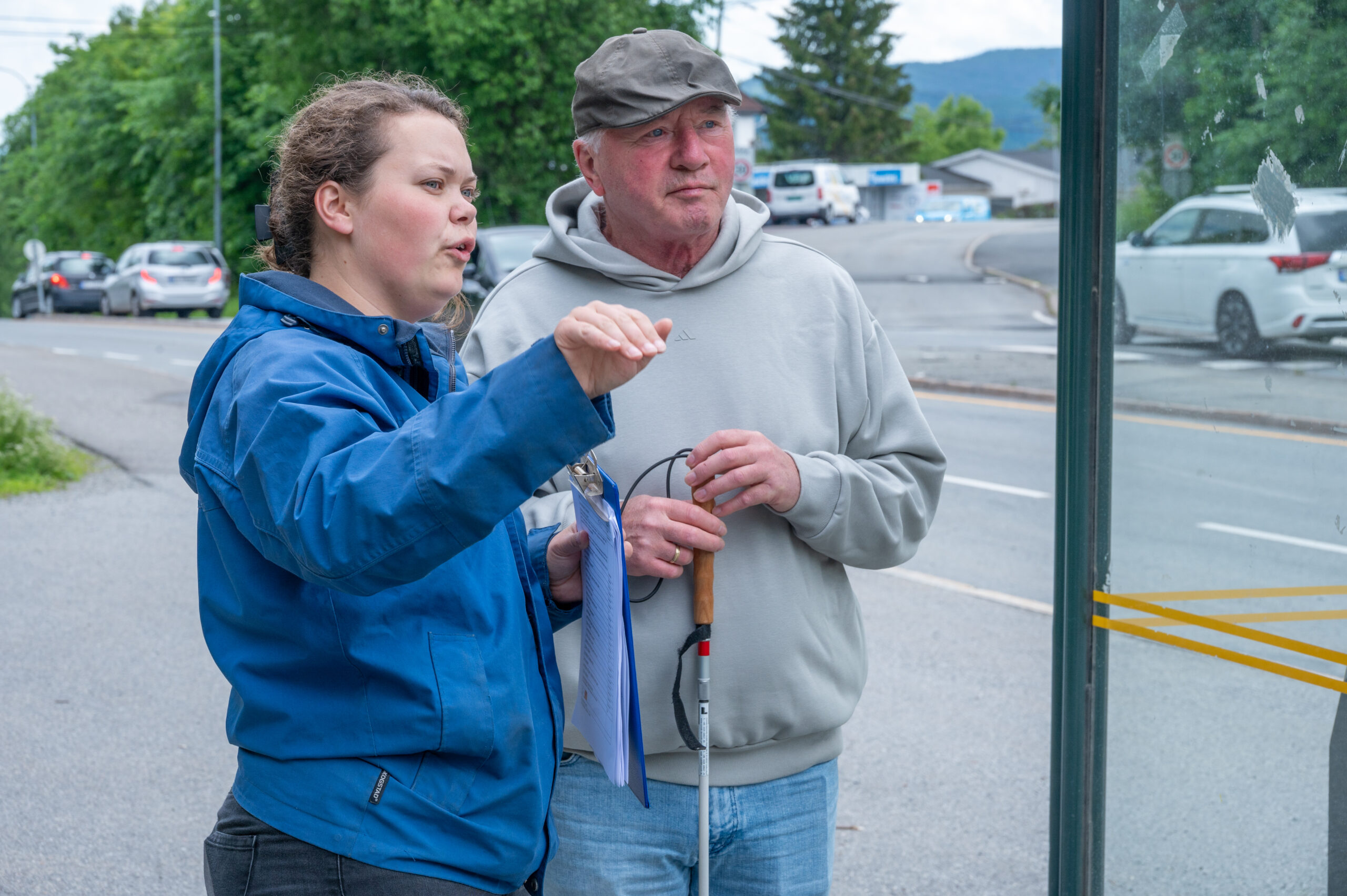
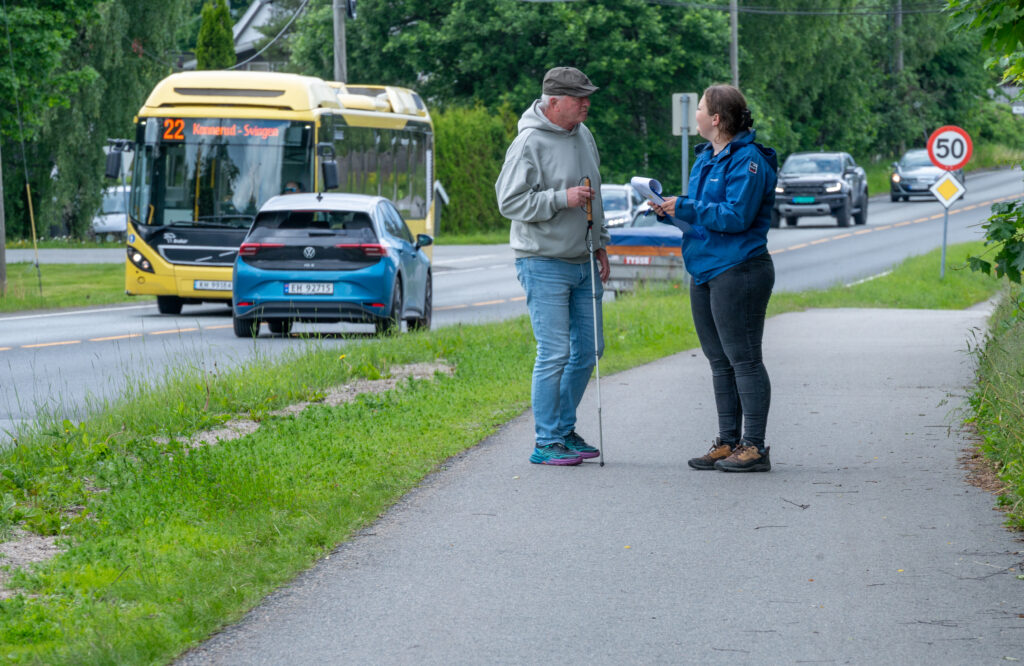
Participants tested mobility programme outdoors
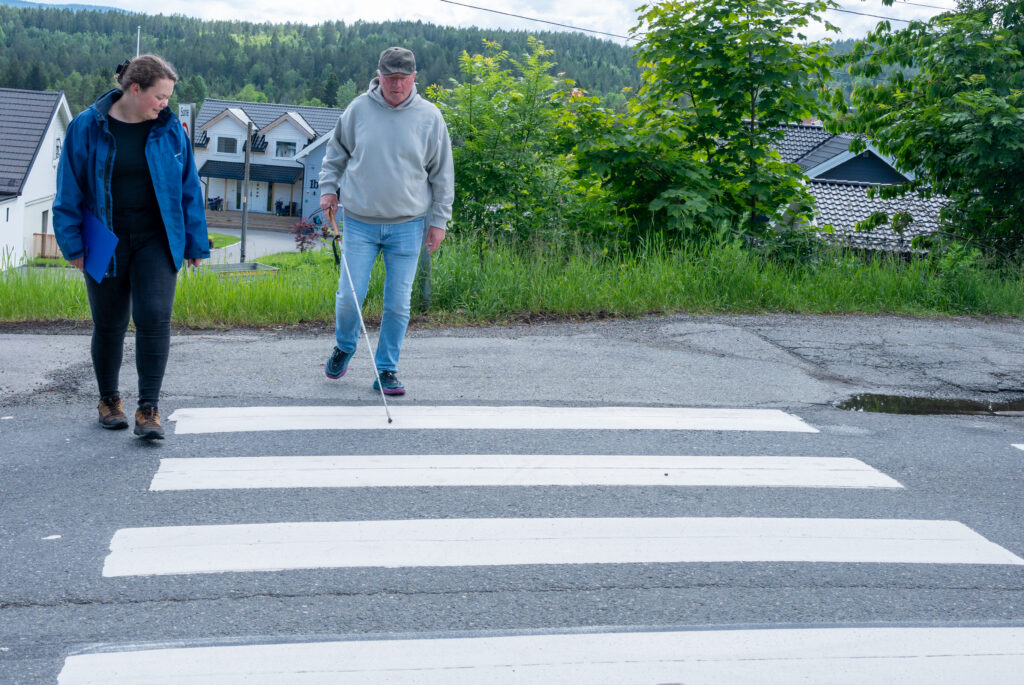
Finally, the participants chose three outdoor situations in which they actively use their hearing to find their way, and tested the mobility programme in these. At the same time, they answered questions about how useful the sound in their hearing aids was for orientating themselves, how much they trusted the information from their hearing aids, how much control they felt they had over their surroundings, how chewing they felt and how good an overview they felt they had.
What did the results show?
The sound localisation test showed no difference between the mobility programme and the normal programme for any of the three sounds tested. The participants with deafblindness had poorer accuracy for all three sounds, and more front-to-back errors for two of the sounds compared to the control group (n=51). At the same time, the results showed that the sound localisation test itself was relatively inaccurate, which means that the results from this test are not necessarily reliable.
When the normal programme and the mobility programme were compared outdoors in real traffic situations, the mobility programme showed statistically significant better subjective experience. On all questions, the mobility programme was better than the normal programme, although there were differences between participants.
Mobility programmes are still worth a try!
The mobility programme did not affect the results of the sound localisation test, but did provide a better subjective experience of control, overview and security in real-life situations where participants oriented themselves using their hearing.
From a risk-benefit perspective, the mobility programme can be useful for some people with deafblindness in certain situations. The risk is low. The cost of the mobility programme is the audiologist's time spent fitting it into hearing aids that the person already has.
Do you have questions about mobility programmes?
Please contact Anne-May Førland by email: anne.may.forland@eikholt.no.
Want to know more?
Are you an audiologist who wants to learn more about fitting hearing aids for deafblind people? Check out the handbook published by NKDB Combined visual and hearing loss and deafblindness for audiographers
Want to learn more about orientation and mobility and hearing? Watch Anne-May Førland's presentation at the Eikholt Conference 2025:
Read Cor van der Lijcke's article Useful and Necessary in SynHør magazine no. 5, 2024, page 18:
NKCDB's article For me, it's not noise - it's information! by Jenny Widmark, published 20 November 2025.
Read about the project in Audiografen no. 4 2025, page 20: Mobility programme in hearing aids for people with combined visual impairment
and hearing impairment/deafblindness